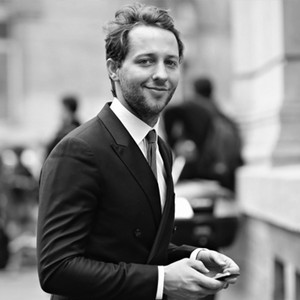
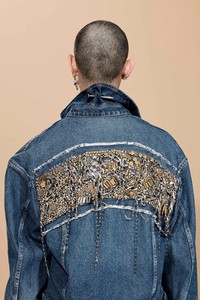
Yoon Ahn and her partner Verbal established their jewelry and design line Ambush in 2008. Since then, they have collaborated with renowned musicians, artists, and other luminaries on projects for the brand. In 2018, Ahn was appointed the jewelry director at Dior Men, and she recently collaborated with Nike and tennis star Naomi Osaka on a full apparel collection. Here, the Quarterly’s Derek C. Blasberg speaks with Ahn about her peripatetic childhood, pivotal moments in her design education, and the evolution of the Ambush universe.
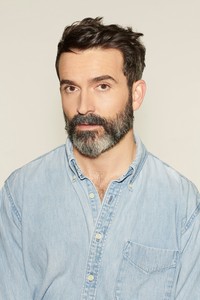
Yoon Ahn, 2024. Photo: Hioshi Manaka
Yoon Ahn, 2024. Photo: Hioshi Manaka
Derek C. Blasberg is a writer, fashion editor, and New York Times best-selling author. He has been with Gagosian since 2014, and is currently the executive editor of Gagosian Quarterly.
Derek C. BlasbergWere you an arty kid? What are your earliest art memories?
Yoon AhnWe moved around a lot because my dad was in the military, so museums and galleries were less a big part of my childhood than things like magazines and going online.
DBWhere were you born?
YAKorea. Every few years, we moved. I lived in Hawaii when I was a kid, then we went to California, then back to Korea, back and forth again, and finally we settled in the suburbs of Seattle. That’s where I settled down and got used to a place. I spent a lot of time at the public library. I wasn’t interested in art books yet; I was more drawn to fashion, so I dove into the old i-D magazines and The Face. From there I learned more about the art world but it was always through the lens of pop culture, fashion designers, musicians and music videos and stuff. For me it was never “Let me study art.” It was always going down the rabbit holes of different things.
DBFashion was your gateway drug.
YAYeah. You’re young and you look at these beautiful people, not just fashion models but all the interesting characters you see populating these worlds. Also, living in the suburbs of Seattle, which was quite gray and full of all the stereotypes, like flannel shirts, I’d look at the opposite end of the world and think, “Omigod there’s a beautiful place out there with these kinds of people and one day I hope I can make it out there.” It gave me a mental escape to yearn toward something in the future.
DBHow long did you stay in Seattle?
YAMiddle school and high school in Seattle, and then I went to Boston University, where I studied graphic design. This is when I started to get into the art world a little more, because the graphic design program wasn’t entirely based on what you can do on a computer. My teachers were classically trained and they insisted that we do it in the way they were taught in the ’60s and ’70s: we’d have to source, cut, paste, all the things that were established in fine art courses, including oil painting and sculpture. And then the curriculum opened into a full graphic design program from junior year.
DBI wonder if graphic design programs still emphasize non-tech-based process?
YAI’m not sure, but I’m so grateful we had to do everything by hand. Our professor studied under Paul Rand, one of the most iconic graphic designers ever. He did logos for Apple, IBM, FedEx, all these incredible brands. He was brought up in the era of the modernist graphic designers and he believed that you need to have the eye, and be able to figure out what makes sense, before you put your hand on this frame. He’d tell us to think about typography in terms of the words, colors, and shapes that will cut them together and visually convey what the message is about. Literally, two years was a lot of cutting and pasting by hand.
At that time I couldn’t really understand why he was doing that; we were kids and kept asking, “Can we just get a computer?” But looking back I really appreciate it because it helped me to think about the process and the steps. I was able to train my eyes to have precision right away, which helped me when I got into jewelry and clothes later on. If I looked at something, I could tell if it wasn’t symmetrical, something was off, you know—those things come with practice. I’m sure everything’s changed and we’re in a different place now. Everyone is talking about AI, which doesn’t even require humans. But I believe you do still need the creative eye to be able to use these tools to produce something creative.
YAI worked in Boston for a few years, doing very uptight, corporate graphic design jobs. It was entry level, of course, so I was assisting other designers, and we did a lot of schools, hospitals, and a lot of corporate things. I jumped from college, where I didn’t even get to really develop software skills, into a corporate setting, where I had to learn software, which was very technical. So it was technical and conservative and stiff, which I didn’t love, but I can now appreciate all those experiences and the exposure to different forms of graphic design. Those definitely came in handy when I started my own brand. Looking back, it makes sense, but yeah, at the time I was bored out of my mind.
DBYou were incubating in your boredom.
YAExactly!
DBWhen you were in a suburban high school in Seattle, did you dream of becoming a jeweler or fashion designer?
YANo way! Fashion was something I was obsessed with looking at but I didn’t think I was going to be part of the industry. It was just more like, “Oh, I admire these people. They’re so inspiring.” I was drawn to characters, I think. I was more into music and music personalities. When I moved to Japan to be a freelance graphic designer, I got a closer look at other worlds. Specifically, I spent a lot of time clubbing, which was a mix of fashion and art and other industries. When I say clubbing, I don’t mean New York kinds of clubs.
DBIt’s a good distinction. You’re not talking about finance bros and bottle service.
YAExactly. In Tokyo the clubbing scene is more like London, where there’s a music movement and you become part of the local scene.
DBWhat convinced you to move from Boston to Tokyo?
YAMy partner, who started Ambush with me, said, “Why don’t you try Tokyo, because I think you might enjoy a different challenge.” He said there were more opportunities there, and we should just go out, try it, and if we don’t like it, we can always go back to the States and move to New York. That was almost twenty years ago.
DBFamous last words.
YAExactly.
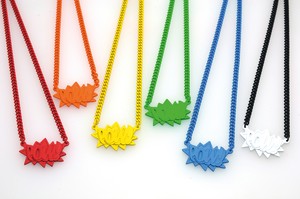
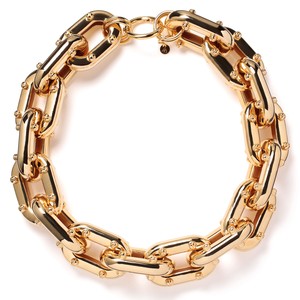
POW! ® Chain. Photo: Toshiaki Shiga
DBYour big break were some of the jewelry pieces. I remember the POW! necklaces, which Kanye West wore and were sold at Colette. How did those happen?
YAThat’s where clubbing and meeting people through the music scene played a role. Obviously I’m crunching up years of experience, but the thing I loved about clubbing at that time was that everything I’d read about in The Face and i-D, the club culture and the peacocking part of it, I could see with a new generation coming into this Tokyo scene. That was taking place in fashion and music and all that stuff. But there was a time when everybody used to go out every single day, which is kind of weird because if you’re familiar with Asian culture, there’s quite a hierarchy, even in fashion, where there’s older-generation people and younger. I loved this moment when everyone was mix-matching and in the same place, we all hung out, had fun, exchanged ideas. That’s how I met all the OGs and the generation above me from the fashion scene. They gave me a chance to collaborate, introduced me to new music people, exchanged ideas. It wasn’t like now, when all the kids are kind of sitting there thinking, “I want to start a brand.” It wasn’t. It was literally just talking about things, and then you’d go back home and it would be like, Let me make this, let me make that, for fun. Then it all kind of brewed together. I’m sure New York had that kind of scene too, no?
DBWhen I first moved to New York in the early 2000s, there was an element of that. But now I think, sadly, New York has become so expensive and so corporatized, you actually don’t get as much mixing among financial classes, the way you’re talking about, as you used to. Which is a problem. I think if New York wants to remain a creative hub they need to think about how to handle disparity of wealth.
YAI’m less familiar with New York because I’ve never lived there, but I think it’s beyond the financial things. People have to be hungry for newness. You can’t really pinpoint what that is, but people come together when they’re collectively seeking something new, and that’s when a new culture is born. I worry that, right now, new things are being born but because we’re exposed to so much stuff at the speed of light, it all just gets recycled so quickly. There’s no time to actually sit and marinate and have conversations about these things, no time to go and think things through. The way we come together is different now. Twenty years ago, even fifteen or ten years ago, even in the Tokyo scene, it was different. We spoke more, we had conversations. The other important thing to mention is that we were doing it just for fun, we weren’t trying to monetize everything.
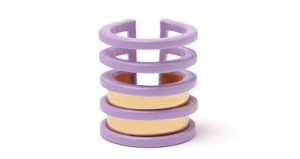
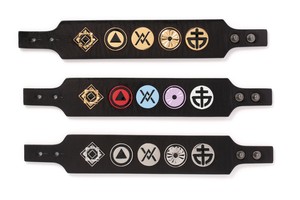
NOMAD Grill Ring. Photo: Toshiaki Shiga
DBHave you read Patti Smith’s Just Kids [2010]?
YAYes, great book.
DBI reread it this year and it made me so nostalgic for a moment in New York when it felt like so many people were focused on creativity, when young artists were paying their rent with paintings. It seems sort of quaint nowadays.
YAI think that helped creativity.
DBWhat were some of the big first moments you had with Ambush?
YAWe’d make things for fun, and they’d get picked up naturally, because we happened to be in the right place with the right people at the right time. Kanye used to come out to Tokyo a lot, he picked up Ambush and he’d wear it. Sarah [Andelman] from Colette was the first one to actually put an order in from outside Japan. It probably wasn’t even a brand yet! It was like, “Okay, I guess we got an order, can you make a few more,” to the people who were making those chains and rings for us. We were packing it and sending it from our own apartments! We didn’t even have an office at the time. Eventually we had to sit and think, “Is this something we’re taking seriously?” It’s as if we’d sung a song for fun and it had gotten featured on a famous singer’s album. You ask, “Do I stay as a one-hit wonder or do I have to pursue things and see how far it can go?” I thought, Life’s short, right? Let’s see where we can go with this.
Officially we launched around 2012, not knowing how the fashion system worked, never having worked in the fashion industry. I didn’t know the system. We just launched it and then we’d show whatever and buyers would be like, “You know, there’s things called ‘seasons’ and ‘buying.’ We can’t put out the budget just because you emailed us.” I was like, “Oh, okay.” That’s when we started to get in shape as a brand—“Oh, we’re going to do two collections, we’ll do spring/summer, fall/winter.” Everything was quite DIY. There wasn’t a business plan at first. We never had that.
DBDo you have some of that stuff now?
YAOf course we do! We’re much more structured. I have a lot of employees to feed, so we need structure. It helps me be creative within a certain framework.
DBIs your creative process different now?
YAAt that time it was less about products and more about establishing who you wanted to be in the scene. Back then, we were much more focused on how we even get our foot in the door in the industry. One thing I noticed while we were doing things in Tokyo was, Japanese buyers and the Japanese scene were looking for very safe things. When you’re young and you’re starting as a brand, sometimes you have more avant-garde ideas. It wasn’t the right time to kind of pull myself back to meet their small demands. So I was like, “Okay, whether I make it or not, let me see if I can go to Paris,” because that’s where the top-of-the-top people were. If I can survive there, I think I can kind of see where I can go with this. We went in 2017, did our first exhibition, and we showed a little bit of clothing with it. At the time we wanted our own clothes for our look book, we didn’t want to use someone else’s brand. So we made a few things and from there we took things step by step and kind of grew from it.
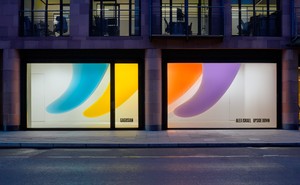
YAI started a content page, Ambush universe, on our website, linking to social media, to make it a window to our world for our customers and outsiders. I was somewhat frustrated with the media trying to box us into certain types or categories as a brand. Just because we dwell in the space of new-generation streetwear doesn’t mean we all like similar things, or came up looking at similar things. I created this to be in control of curation. There are categories like “Art & Design Theory,” “Field Study,” “Living World,” “Playlist,” “Ambush® Artifact,” and “In Focus.” They cover everything: people, places, sounds, visions, and anything that inspires us. Some are more direct extensions of our world, like our Spotify playlist, which gets shared in all our workshops (brick-and-mortar stores) to create a sonic mood to link to the product ambiance of our space. Some directly link to our archive pieces to reintroduce them and remind people what we’ve been doing if they just joined us on the ride. Another fun part is that we work with many up-and-coming photographers, illustrators, and writers worldwide to collaborate on the content.
DBI saw artists like John Chamberlain, Constantin Brâncuși, and James Turrell, who’s one of my absolute favorites, on the site.
YAThey’ve influenced us in many ways in some of our pieces from past collections. We’d love to work with them or their estates one day if the opportunity arises.
DBWhat kind of art are you drawn to?
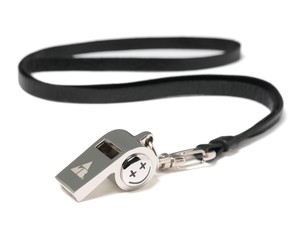
NOMAD Smiley Whistle. Photo: Toshiaki Shiga
YAI don’t have a specific medium, but anyone with a very clear vision and easier-to-digest execution. I love how some artists see the world, and I learn a lot by digging into their thought processes, what made them become who they are, and how they are producing these fantastic arts to express themselves. Your peripheral vision widens as you study how many different ways you can look at the world and connect dots and the best way to see other humans with empathy. I’ve done collections more directly related to artists, like the photographer Karlheinz Weinberger in our Halbstarke collection, the Alejandro Jodorowsky–inspired Holy Mountain collection, and the NOMAD collection inspired by Katsuhiro Otomo’s Akira. Most obviously, our genesis piece, the “POW!” ring and necklace, was inspired by Roy Lichtenstein and Pop art.
DBAre there any artists you’d love to work with?
YAI’d love to work with one of my favorite directors one day, who include Luca Guadagnino, Denis Villeneuve, Wong Kar-wai, and David Fincher. It would be a dream to be part of a movie by working on costumes that define the characters. The fashion catwalk or presentation is a tiny version, where the setting, sound, characters, and collection story all come together, for a few minutes anyway, so I’d love to experience making a more long-lasting version.
DBWhat was it like being in Paris?
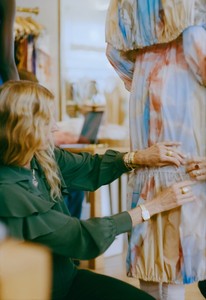
YAI always felt like I was an outsider because I didn’t come from a fashion school, I didn’t come up under a certain designer or get trained a certain way. So I had to work on being open to doing things differently from the way they’d been done in the past. We were so open to receiving a different way of doing things. Nowadays the word “collaboration” is such a big part of everyone’s marketing exercise, but that’s always been in the DNA of what we’ve done and how we came up. Someone from Amazon would be like, “Do you want to do something?” And I’d be like, “Yeah, actually I do have an idea. I’m from Seattle!” I’d just come up with fun ideas and we’d put together a fashion show, but also there’s different things going on where I’m serving food in an Amazon Prime box to people in their seats right away. I’d just come up with fun ideas to see what I could do beyond jewelry and fashion. It’s hard to explain because if you’re not from fashion I think people will be like, “How’s that going to go with clothes?” But it makes sense to me.
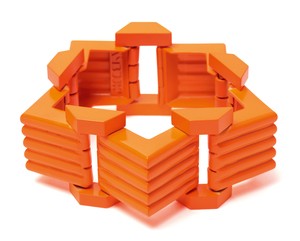
NOMAD Anchor Chain Manaka. Photo: Toshiaki Shiga
DBDo any art movements or artists working today inspire what you do?
YAI’ll be honest, I don’t check out that much art because you’ve only got twenty-four hours in a day and my head is in a zillion different spaces right now. But I went to Korea Frieze, I went to Hong Kong Art Basel. I go around and look at things and some of the names I recognize. But I can’t pinpoint something like, This person’s really interesting to what I’m doing with the label.
DBDo you think fashion can ever be art? Do you think art can ever be fashion?
YAIt depends on what type of designer you want to be. There are so many fashion designers who do very creative things but also made a very sustainable business. I’m from Japan, so we can talk about Comme des Garçons. [The designer Rei Kawakubo] can do those amazing pieces on a catwalk, which are art, but she has a very smart business system too. The stuff you see in stores—to me it’s like, creativity is not just about what you produce as a creative person but also about what type of business you’ve built to support your creativity. That requires creativity.
DBTen years or so ago, there was a retrospective of Comme des Garçons at the Met[ropolitan Museum of Art, New York], and it was incredible to see her work positioned in one of the most important art museums in the country. Do you collect any art?
YAActually I’m purging a lot of stuff right now. There’s just so much going on every day from morning to night that when I come home I love sitting in silence and nothingness. I don’t want any furniture or anything. It’s quite extreme.
DBYou’ve turned into a minimalist.
YAI want to get rid of everything! It’s interesting to say—or it’s ironic to say, as someone who makes things—that I don’t have as much attachment to things as I used to. I think that kind of freed me a lot, actually, to be creative in a new way from before.
NOMAD Grill Ring. Photo: Toshiaki Shiga
DBKarl Lagerfeld was like that. There was a point in his life where he’d collected as much eighteenth-century gilded furniture as he possibly could, and was well-known in every auction house, and then one day he woke up and decided, “I’m actually over this and I don’t want any of it.” And that’s when he sort of went space-age futuristic.
YAI’m kind of the same. Now my head’s more in that space, and I look forward to the future more than the past, more than to collecting, holding on to things. I guess there’s an art to that too, right? Consuming those things to study and really understand what it was about is a beautiful journey, to be able to collect it and actually make that be part of you. But I don’t see the point of collecting something for the vanity of it. I’d rather not have that and have a very open headspace that I can fill with the things I’m naturally drawn to. And I’d rather just kind of dwell in that space. It sounds abstract but maybe it’s that I’m a little bit older and wiser. But that’s what I mean about things—just that things don’t interest me as much.
DBSpoken like an artist!
YALooking for connection, not just things.
DBHave you ever thought about going back to your roots and trying out being a fine artist?
YAWell, I’d just call myself a mixed-medium artist. One day I could do sculpture. I could try painting, film, whatever. I guess in that way I feel like I relate a lot to how Pop art came out in the ’60s—there were things that were happening in society, in the zeitgeist moment, but also there’s a message behind it.
DBThat era had a lot of experimentation, artists doing films, sculptors doing live performances.
YAOn the surface, people looked at it as something light. But it wasn’t. It was quite philosophical what Andy Warhol and those guys were doing. I’d love to bring that era back again.
Derek C. Blasberg is a writer, fashion editor, and New York Times best-selling author. He has been with Gagosian since 2014, and is currently the executive editor of Gagosian Quarterly.