
The Art of Biography
Gertrude Stein: An Afterlife
Francesca Wade’s new biography of Gertrude Stein sifts through the writer and collector’s layered life and legacy. Here, Wade speaks with the Quarterly’s Gillian Jakab.
Summer 2026 Issue
Andrew Durbin’s dual biography The Wonderful World That Almost Was: A Life of Peter Hujar and Paul Thek, published by Farrar, Straus and Giroux, tracks the convergences and divergences in the lives of the two artists, from their first meeting in Coral Cables, Florida, in 1956 through their generative romantic and creative partnership in New York, Italy, Fire Island, and beyond. Ahead of the release, Durbin met with the Quarterly’s Wyatt Allgeier to speak about the development of the project, the sublime noncompliance of these two artists, and the motifs of love, death, and rebirth that weave through the telling of their story.
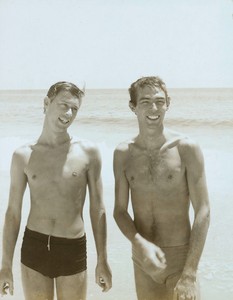
Paul Thek and Peter Hujar, Fire Island, New York, 1961 © 2026 The Peter Hujar Archive/Artists Rights Society (ARS), New York. Photo: Peter Hujar, courtesy the Peter Hujar Collection, the Morgan Library & Museum, New York
Paul Thek and Peter Hujar, Fire Island, New York, 1961 © 2026 The Peter Hujar Archive/Artists Rights Society (ARS), New York. Photo: Peter Hujar, courtesy the Peter Hujar Collection, the Morgan Library & Museum, New York
Wyatt AllgeierIn your acknowledgments, you say that the book’s origin was a conversation with [the novelist and critic] Lynne Tillman. What about her recollections of meeting Peter Hujar set you on course?
Andrew DurbinWell, I first encountered Peter’s work when it appeared on the ANOHNI and the Johnsons album I Am a Bird Now [2005], and while I was familiar with Paul Thek from a high school visit to the Smithsonian, my interest in him was revived through my friendship with the artist Stewart Uoo, who is a big admirer of his work. I started to put them together in my head a little bit, and then in the fall of 2018, when I was living in Berlin, I came across a photograph of Thek with Tennessee Williams, and I was so captivated by it. And I thought, I really don’t know anything about Thek, or about his relationships with anyone, let alone Peter Hujar.
From that photo I started to draft a play, which was not very interesting—I quickly abandoned it. But when I went back to New York, I remember having a conversation with Lynne about Peter. She once spent an evening with him at the Mudd Club, where they just started talking, and she remembered it was one of those moments where everything else drops away and suddenly you’re all alone with this one other person. She was mesmerized by him. It led to so many questions on my part, and she encouraged me to find out more about him.
WAIn terms of finding out more, it’s clear throughout the book that you were able to source an incredible amount of primary material—letters, diaries, records, negatives—and gain access to a large group of people who knew Thek and Hujar. You conducted a lot of interviews. How did you go about the research?
ADFor the first year, I essentially played telephone. I called up [the photo curator and critic] Vince Aletti in October of 2021, when I knew I was going to write the book, and interviewed him first. He recommended I call a few people, then those people recommended others, and so on. A real network developed in that way. On top of that, of course, I contacted the two estates and let them know that I wanted to do this. Very happily, Peter’s estate is very well organized at the Morgan Library [New York]; unlike Thek, he was a fastidious organizer of his own life, so all his letters, his tax returns, everything has been saved.
From there I sat down, categorized the material I’d gathered, and began to create a central timeline, which is the spine of the book. And every time I learned some new fact about the two, whether in conversation or in reading about them or in working in archives, I would add it to this timeline. I tried to approach the book organically. This is my first biography. I read a lot of Janet Malcolm in my twenties—that was my training, which means I was trained to be suspicious of biography.
In terms of the interviews, I was lucky in that virtually everyone—not everyone but virtually everyone—wanted to help. They gave me access to their diaries, they told me their memories, they shared their letters, they put me in touch with anyone they thought might help me out.
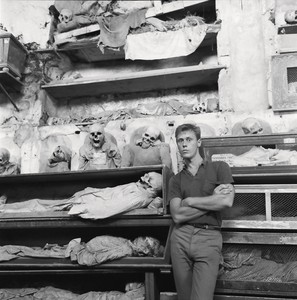
Peter Hujar, Paul Thek in Catacombs (II), 1963 © 2026 The Peter Hujar Archive/Artists Rights Society (ARS), New York
WAThe book is unique in that it’s a double biography. It’s your first biography, but you chose to tackle two subjects at once! There must have been challenges with that. You’ve balanced these dual narratives beautifully—they each feel properly weighted, taking their own space, with enough intersections and divergences in the men’s lives to keep the whole thing dynamic. It’s a technical feat, and I wondered about how you approached this aspect.
ADThat was the biggest challenge. They both led such rich lives. Everyone likes to think they’re leading a rich life, but these two guys really lived: They traveled, they met an incredible number of people, they collaborated widely. What I found challenging was how to condense those lives into one book. From the beginning, I wanted the book to be something readers could carry around, something that would feel substantial but still accessible. That meant I had to make choices in terms of what I would leave out. My primary focus was the relationship between Peter and Paul. In that regard, the book became a tennis match where I was hitting a ball back and forth between them. The art was a question of serve.
WAWere there other biographies, or other genres, that you looked to for inspiration? You mentioned Janet Malcolm—
ADI’m a lonely writer. I work in isolation, which you can’t really do with biography—you’re constantly interacting with other people. But I was very careful in reading other biographies; I didn’t want to be too influenced by any one approach. But three come to mind. Reiner Stach’s three-part biography of Franz Kafka [2002–14] is totally perfect. It’s thorough, engaging, thoughtfully written. It has a natural cinematic quality to it without trying to go to places where the facts don’t lead. I think a risk of biography is that you’re tempted to imagine the spaces where you can’t go, because there’s nothing there. That’s a challenge every biographer faces. Stach handles the narrative so exceptionally well. And then Sue Prideaux’s I Am Dynamite! A Life of Friedrich Nietzsche [2018] is another extraordinarily well-written biography. She constructed such a compelling portrait of a complicated figure who suffered hugely. And I thought she handled Nietzsche’s emotional life beautifully. And then finally, Cynthia Carr’s biography of David Wojnarowicz [2012] was key; the way she captures a time and a place is so inspiring.
WAOne of the pleasures in reading a biography is encountering the subject’s wider milieu, learning about these other figures who made up the community, especially those who are lesser known, possibly on the verge of disappearing from any sort of canonical history of a time and place. You’ve done a great job of bringing these characters in, sketching them effectively, and then moving back to the main line of Peter and Paul.
ADI loved thinking about their community. These are two guys who knew a lot of people, and they had a lot of friends in common; there are so many ways to write about their community. But for me what became clear, and what was important to focus on, was the women in their lives. They were both loved and supported by women, and women artists were very important to their work—Ann Wilson, Sheyla Baykal, Linda Rosenkrantz, and many more. So, partly, I wanted to tell their story through the eyes of the women who worked with them and struggled with them and had difficult, but also very loving, relationships with them. Particularly someone like Ann Wilson; she knits the book together.
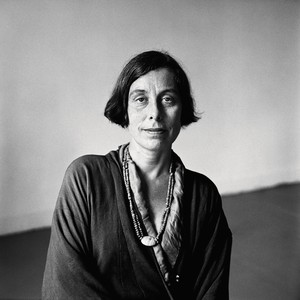
Peter Hujar, Ann Wilson (III), 1975 © 2026 The Peter Hujar Archive/Artists Rights Society (ARS), New York
WAIn terms of the key motifs, rebirth is a huge one. Thek’s Tomb [1967] is a concrete version of that, but even early on in his life he changed his name from George to Paul, as you narrate in the book. When did it become clear to you that rebirth would be a main through line? Was that an early realization or did it come later?
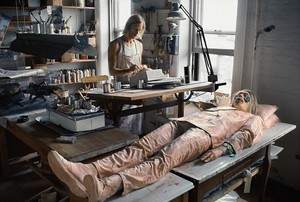
Peter Hujar, Thek Working on the Tomb Figure, 1967 © 2026 The Peter Hujar Archive/Artists Rights Society (ARS), New York
ADIt evolved naturally. It began to form in my mind relatively early, but only unconsciously. I was working on the scene of Paul in Nantucket, when he changed his name; there were several versions of the chapter and I kept rewriting it. There could have been an entire book devoted to that one summer in Nantucket. But I knew I needed to find a way to shrink the story down to retain the gravity and meaning of the moment. Eventually I hit upon what would become this recurring idea: The Paul who entered the water always reemerged a different person. These transitions from land to sea, from changing your name, changing place, to changing artistically, led me back to Adam Phillips and his essay “Time Pieces” [2006], in which he imagines a culture that orients itself toward conception rather than death. I’d read that essay many years ago, but when I revisited it, it was so powerful and clear and relevant to what I was trying to do. The essay is such a “Thekian” idea.
WAFor a reader, it’s helpful to have that hook to keep coming back to, a question to ponder again and again as we move through the narrative. Do we want to talk about some of the ethical questions involved in writing a biography?
ADThere are two central ones that I contended with. First, what do you do with what you don’t know? That was a big question. How do you plug that gap? In one of his books, Edmund Wilson writes an offhand satire of this biographer of a naturalist whose experiences in the woods she wholly invents in purple, cloying prose. I didn’t want to do that, of course, but I was also aware that people would want to know why things were missing, or what was happening in instances where that might have been difficult to say with complete certainty. I had to find this balance between telling a compelling story and telling people that I don’t know something. There’s a line that haunts me from Malcolm’s The Silent Woman [1994], where she says that the readers of a biography never want to read that a biographer has failed to uncover something or to gain access to a crucial archive. They start to lose trust. But sometimes letters are burned, people disappear, someone refuses to share information; you’re dealing with real people here, after all. And as a writer, I had to think as much about what wasn’t there as about what was.
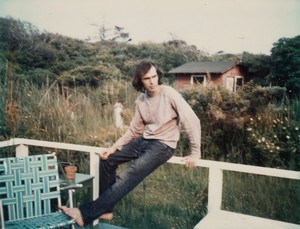
Peter Hujar, Oakleyville, Fire Island, New York, c. 1970. Photo: courtesy the Morgan Library & Museum, New York
WABut that’s not to say you shied away from their erotic lives, from their approaches to sex. That’s central in this book, whereas in so many other biographies you can see the author dancing around it, sometimes to comic effect. But there wasn’t a way to write this book without writing about their sex lives, right?
ADTotally. They made work about their sex lives, especially Peter. It’s unavoidable. It’s in the photos; it’s something he’s thinking about—the erotic dimension of photography. He spoke about it. So it’s just like with their depressions and their rages. There’s a lust and a woundedness and a rage that’s in the work itself, and I knew that I had to explain that to the reader. To be clear, there wasn’t any aspect of their lives where I ever thought, Oh, I can’t go there. It’s just that there were things that I knew were beyond the scope of this book. For example, this biography doesn’t begin with their births and continue through childhood into adulthood; it begins when they are in their mid-twenties. I touch on their early lives, of course, but I never wanted to write ab ovo.
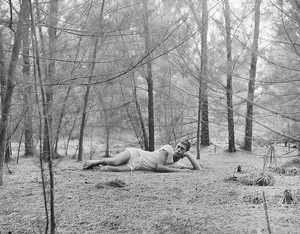
Peter Hujar, Paul Thek, Florida, 1956 © 2026 The Peter Hujar Archive/Artists Rights Society (ARS), New York
WAAnd then in middle school they did this, and in high school—
ADExactly, exactly.
WAThat decision made it rich—you kept mystery throughout that made me want to keep reading.
ADRetaining some of the mystery of their early lives felt true to childhood itself. We all have these strange figures and scenes from our past that now seem to us disconnected or unclear. There’s a murkiness to the past that I wanted to keep in the book. I didn’t want to have an answer for everything.
WAAnother motif in the book is death. But before we speak more generally about that, I have to ask: Did you go to the Capuchin Catacombs [burial catacombs in Palermo, Italy, that Thek and Hujar visited together in 1963]? You write about the place so vividly, bringing this core moment in their lives to a visceral level.
ADFor the most part, if either of them went to a place, and if that place still exists, I went there as well. (The only exception was Norway.) I knew that I needed to experience something of those places, whether it was Fire Island, or Casteldaccia, Sicily, where Paul lived for a time, or the catacombs in Palermo.
WAIt must have been hard for you, Andrew.
ADI know! When I was writing my first novel, I sent some pages to the poet and novelist Kevin Killian. He was very generous with me; he read everything. At one point he said to me, “I don’t know how anything smells! You’re not conveying the sensuality of experience.” That has driven my writing ever since. So I visited the catacombs with this specific mission: I need to know what that place smells like in order to write about it.
WATheir trip there was transformative for both artists. Hujar’s photos of the bodies there are masterworks in his career, and the place is a clear influence on Thek’s sculptures broadly. You quote him telling the curator Gene Swenson, “I opened [a glass coffin] and picked up what I thought was a piece of paper; it was a piece of dried thigh. I felt strangely relieved and free. It delighted me that bodies could be used to decorate a room, like flowers. We accept our thingness intellectually, but the emotional acceptance of it can be a joy.” It’s a powerful quote, and I was curious throughout whether this book was also an exercise in working through existential questions that you were already dealing with? About death, rebirth, love, creation?
ADThe book I thought I was writing ended up being very different from the book I wrote—I think that’s true for every project. Often, in writing about artists who died of AIDS, there’s a certain sanctimonious tone that erases their actual lives; everything is read through the lens of AIDS, which transforms them into these doomed twilight figures. I wanted to resist that. Which isn’t to say that AIDS isn’t an important part of the story, only that I didn’t want it to become the story. I needed to write a book about how these guys lived and what it was like to be alive in the 1960s and ’70s. In doing so, I think death—something both of them thought deeply about—emerged differently.
WAYou were orbiting a more fully faceted life than just the tragedy. In Thek’s life there’s something—I don’t want to say prophetic, but a lot of the things that he was horrified by, concerned about, had an antagonism toward, are things that have come fully to bear on our lives now: technology and its alienating effects, carnage and the American empire. Was that part of the book for you—a question like, What can we learn about surviving now from these lives in the past?
ADI wrote from my own position in time, of course, but I didn’t want to be constantly taking the reader aside to say, Isn’t this relevant to you now? I knew the resonances with the past would emerge in their own way without me needing to do much other than write the story. Great art is always prophetic. Look at the paintings of Van Gogh; read Van Gogh’s letters—the most remarkable letters. It always feels like he’s talking about right now. I think that that’s true of Paul and Peter, too. They’re always speaking to us. So I trusted the material. I thought, If I’m true to the material, my readers will find what they need in the book. I hope they take away something about political art, I hope they take away something about love and friendship. But yes, what’s so interesting about Paul is how familiar some of his language is about the ruin brought about by American civilization, his antiwar views. Even into the 1980s, a period I don’t really touch on, he recognized the depravities of industry, the perils of climate destruction. That’s probably why people are attracted to Peter and Paul right now: their artistic integrity and authenticity. They were noncompliant. That’s such a beautiful thing, such a quality, and something we could all learn from now.
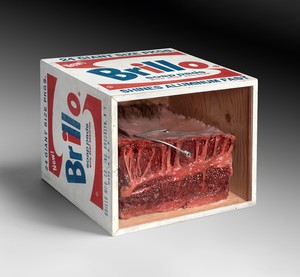
Paul Thek, Meat Piece with Warhol Brillo Box, 1965, beeswax, painted wood, and Plexiglas, 14 × 17 × 17 inches (35.6 × 43.2 × 43.2 cm), Philadelphia Museum of Art, purchased with funds contributed by the Daniel W. Dietrich Foundation, 1990 © The Estate of George Paul Thek
WADefinitely. As I read, I kept stopping, saying to myself, “Yikes, I live such a safe, bourgeois life. Should I be more difficult?”
What was the biggest surprise? You were going through Peter’s negatives and seeing what he chose, what he didn’t choose. As you mentioned, you had access to Paul’s diaries. Maybe there was an interest of theirs, or an aspect of their lives, that was totally eclipsed by the more famous artworks they produced?
ADIn many ways everything was a surprise. But I would say the tenderness of Peter’s photography, particularly his photos of Oakleyville [on Fire Island], always make me catch my breath. And then for Paul, it’s his writing. His diaries are a remarkable literary achievement. He wrote novels. He wrote memoirs. He wrote poems. Those diaries changed my own writing and how I think about art. They rewrote what I thought was possible.
Andrew Durbin, The Wonderful World That Almost Was: A Life of Peter Hujar and Paul Thek (Farrar, Straus and Giroux, 2026)
Wyatt Allgeier is a writer and an editor for Gagosian Quarterly. He lives and works in New York City.
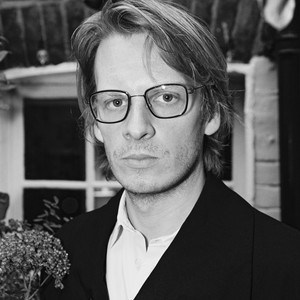
Andrew Durbin is the author of MacArthur Park (2017), Skyland (2020), and The Wonderful World That Almost Was: A Life of Peter Hujar and Paul Thek (2026). He is the editor-in-chief of Frieze magazine and lives in London. Photo: Suzannah Pettigrew
Francesca Wade’s new biography of Gertrude Stein sifts through the writer and collector’s layered life and legacy. Here, Wade speaks with the Quarterly’s Gillian Jakab.

On April 16, the Institute of Contemporary Art, Boston, opened the first midcareer survey of Derrick Adams’s multidisciplinary practice. Covering over twenty years of work, the exhibition, titled View Master, brings together the artist’s painting, sculpture, collage, performance, and video, as well as a vibrant new commission created for the museum’s façade. Ahead of the opening, Adams met with Tessa Bachi Haas, cocurator of the survey, to discuss his formative experiences with television, the impact of his work in arts education on his practice, and the importance of taking a more complex, more joyful, and more expansive approach to Black American life and culture.

On March 28, a major exhibition of Jenny Saville’s work opened at Ca’ Pesaro–Galleria Internazionale d’Arte Moderna in Venice, bringing together nearly thirty paintings from the 1990s to the present. The exhibition is curated by Elisabetta Barisoni, head of the museums division at Venice’s Ca’ Pesaro, Museo Fortuny, and head of MUVE in Mestre. Saville’s monumental canvases are set in dialogue with the great Venetian artists of the past, creating a unique encounter between contemporary painting and the city’s artistic heritage. Here, the artist speaks with Stefania Ventra, professor with Ca’ Foscari University of Venice, about her early trips to Venice, the radicality of Titian’s painting, and depicting emotional truth.

Jeff Koons tells Alison McDonald about his appreciation for the pioneering artist and thinker Marcel Duchamp.
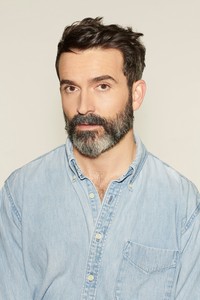
Daniel Roseberry, the creative director of Schiaparelli, met with the Quarterly’s Derek C. Blasberg at the maison’s historic headquarters at 21 place Vendôme, Paris, following the Schiaparelli Fall/Winter 2026–27 ready-to-wear show. Since taking the helm in 2019, Roseberry has been credited with advancing the heritage of the house through unpredictable sculptural designs that carry Elsa Schiaparelli’s Surrealist spirit into a new century. The pair discuss the much-anticipated exhibition Schiaparelli: Fashion Becomes Art, now on view at the Victoria & Albert Museum, London, as well as Roseberry’s early exposures to art, his continued dedication to drawing, and the enduring legacy of Elsa Schiaparelli’s daring vision.

Helter Skelter—an exhibition at Fondazione Prada’s Venetian venue, Ca’ Corner della Regina—marks the first creative dialogue between two visionaries of American art, Arthur Jafa and Richard Prince. The show explores the grit, grift, violence, and ingenuity of American culture through more than fifty works, including photography, video, and large-scale installations that interrogate themes of race, gender, media, and politics. In the interview below, Nancy Spector, the exhibition’s curator, speaks about the shared motifs—from apocalyptic sunsets to a fascination with “monstrosity”—that led her to pair these artists for the first time.

A conversation between Theaster Gates and Jessica Bell Brown, with an introduction by Sydney Stutterheim.
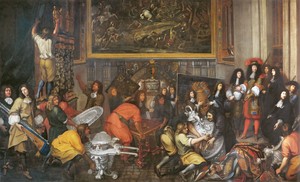
Valentina Castellani speaks with the Quarterly’s Alison McDonald about her new book Trading Beauty: Art Market Histories from the Altar to the Gallery. The illustrated survey traces the evolution of the Western art market from the medieval era to the present day.

Sally Mann joined novelist Amor Towles in a conversation about her widely celebrated new book, Art Work: On the Creative Life (2025), at an event hosted by the New School and the Strand in New York. Published by Abrams, Art Work is about the challenges and pleasures of the creative process. Its mix of illuminating stories, practical advice, and life lessons, illustrated throughout with photographs, letters, and journal entries, offers insights into Mann’s own experience of making art. Here, Mann and Towles speak about the writing process, historical ghosts, and fortunate mistakes.

Ahead of Persephone, an exhibition of new paintings by Mary Weatherford inside Hong Kong’s historic Pedder Building, the Quarterly’s Wyatt Allgeier met with Weatherford and the architect Mark Lee to talk about their collaboration. Here, they discuss how custom architectural interventions—from mirrored columns to strategic light play—transform the gallery, evoking Persephone’s mythic journey through the underworld and back into the light of spring.
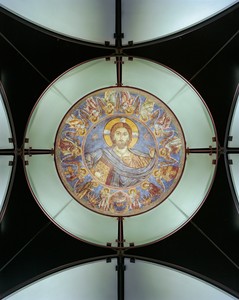
Ashley Overbeek tells the story behind the Art and Antiquities Blockchain Consortium (AABC), cofounded by Susan de Menil. The story begins with a famous pair of Byzantine frescoes once hosted by the Menil Foundation in Houston, passes through the repatriation of a group of Bura funerary objects to Niger, and explores how new technologies are helping to resolve the world’s oldest cultural disputes.
Courtney J. Martin, executive director of the Robert Rauschenberg Foundation, discusses its approach to the artist’s lifelong philanthropy, the intricacies of stewarding an artist’s goals and passions, and more.