

About
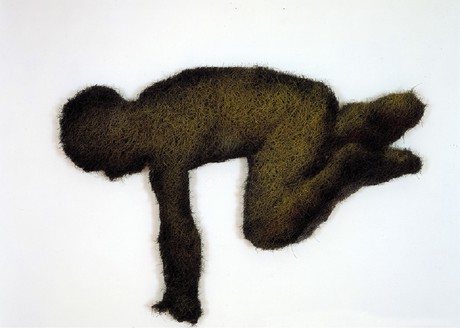
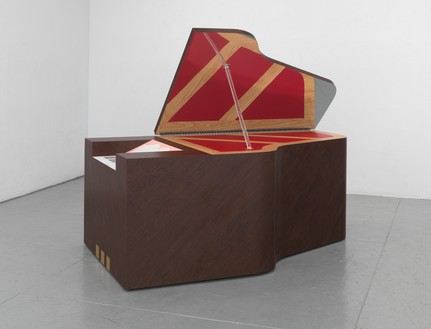
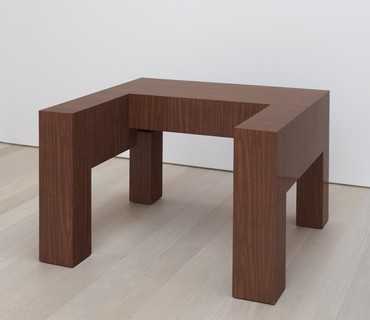
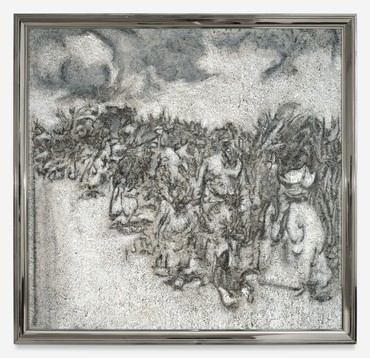
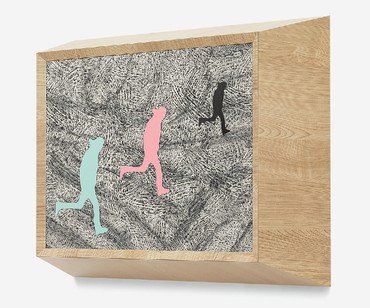
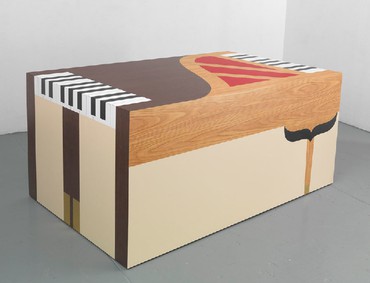
Richard Artschwager forged a unique path in art from the early 1950s through the early twenty-first century, making the visual comprehension of space and the everyday objects that occupy it strangely unfamiliar. His work has been variously described as Pop art, because of its derivation from utilitarian objects and incorporation of commercial and industrial materials; as Minimal art, because of its geometric forms and solid presence; and as conceptual art, because of its cool and cerebral detachment. But none of these classifications adequately define the aims of an artist who specialized in categorical confusion and worked to reveal the levels of deception involved in pictorial illusionism. In his work, an anonymous sheet of walnut-pattern Formica is both itself and a depiction of a wooden plane; a table or chair is furniture, sculpture, and image all at once; and a painting or sculpture can be a “multi-picture” or “three-dimensional still life.” Artschwager foregrounded the structures of perception, striving to conflate the world of images—which can be apprehended but not physically grasped—and the world of objects, the same space that we ourselves occupy. His last body of work marked a departure from his previous series, in that the images he composed from sources in popular culture communicated overt, if deadpan, allusions to contemporary political issues.
Artschwager was born in 1923 in Washington, DC, and died in 2013 in Albany, New York. After receiving a BA in 1948 from Cornell University, New York, he studied under Amédée Ozenfant, one of the pioneers of abstraction. In the early 1950s Artschwager became involved in cabinetmaking, producing simple pieces of furniture. After a ruinous workshop fire at the end of the decade, he began making sculpture using leftover industrial materials, then expanded into painting, drawing, site-specific installation, and photo-based work. Artschwager’s first exhibition took place at the Art Directions Gallery, New York, in 1959, and was followed by the first of many solo exhibitions with Leo Castelli in 1965. Solo exhibitions include Up and Across, Neues Museum, Nuremberg, Germany (2001, traveled to Serpentine Gallery, London); Museum für angewandte Kunst (MAK), Vienna (2002); Kunstmuseum Winterthur, Switzerland (2003, traveled to Kaiser Wilhelm Museum, Krefeld, Germany, and Staatliche Graphische Sammlung, Munich); Painting Then and Now, Museum of Contemporary Art, Miami (2003); Up and Down/Back and Forth, Deutsche Guggenheim Berlin (2003); Hair, Contemporary Art Museum, Saint Louis (2010); Richard Artschwager!, Whitney Museum of American Art, New York (2012, traveled to Hammer Museum, Los Angeles, Haus der Kunst, Munich, and Nouveau Musée National de Monaco); and Punctuating Space: The Prints and Multiples of Richard Artschwager, Frances Lehman Loeb Art Center, Vassar College, Poughkeepsie, New York (2015).
#RichardArtschwager
Exhibitions
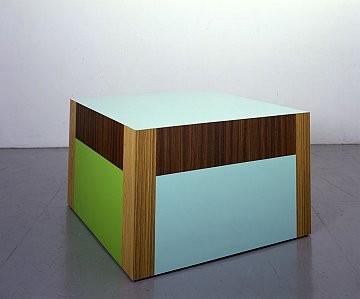
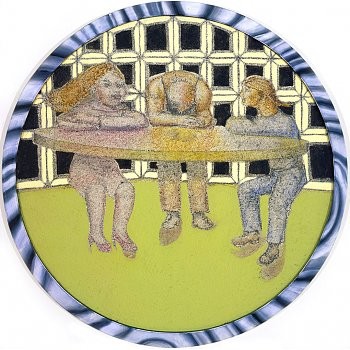
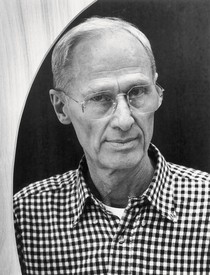
Richard Artschwager
A conversation between Adam McEwen and Bob Monk.
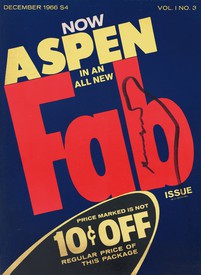
Artists’ Magazines
Gwen Allen recounts her discovery of cutting-edge artists’ magazines from the 1960s and 1970s and explores the roots and implications of these singular publications.
Richard Artschwager
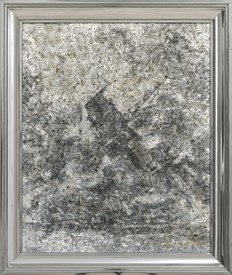
On the occasion of the exhibition Richard Artschwager: Primary Sources, recently on view at Gagosian, New York, Bob Monk and Maggie Dougherty explore the artist’s use of reference materials as the impetus for his paintings.
Now available
Gagosian Quarterly Spring 2019
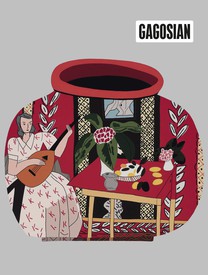
The Spring 2019 issue of Gagosian Quarterly is now available, featuring Red Pot with Lute Player #2 by Jonas Wood on its cover.
Fairs, Events & Announcements
Auction
Printed Matter
Spring Benefit Auction
May 24–June 8, 2023
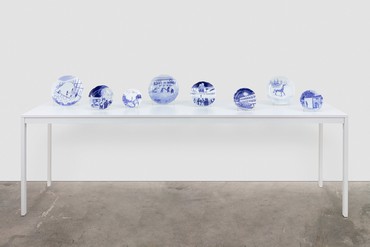
This online benefit auction for Printed Matter features over sixty donated artworks—some of which were created especially for the fundraiser—by contemporary artists, including Richard Artschwager, Piero Golia, Adam McEwen, Richard Prince, Ed Ruscha, Taryn Simon, and Jonas Wood. Proceeds from the auction, which is hosted by Artsy, will support the nonprofit organization’s mission to further the distribution, understanding, and appreciation of artist’s books and related publications.
Piero Golia, The Best Is Yet to Come, 2020 © Piero Golia
Visit
Kunsttage Basel 2022
Richard Artschwager and Douglas Gordon
September 1–4, 2022, 11am–6pm
Basel
kunsttagebasel.ch
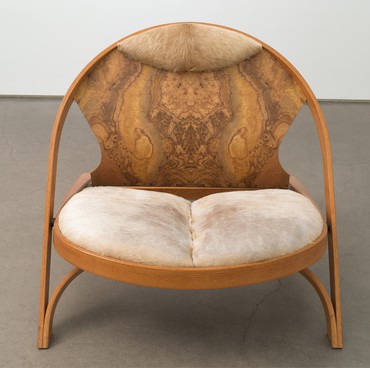
Kunsttage Basel is a citywide program of art events at more than fifty-five museums, galleries, and other spaces. The exhibition Richard Artschwager, featuring a selection of paintings, sculptures, and drawings by the artist, will be on view at Gagosian, Basel, with extended hours. Douglas Gordon will also present work—including Pretty Much Every Film and Video Work from About 1992 Until Now (1999–)—in a weekend-long installation at Fondation Beyeler as part of the program.
Richard Artschwager, Chair/Chair, 1990 © 2022 Richard Artschwager/Artists Rights Society (ARS), New York. Photo: Rob McKeever
Art Fair
Art Basel Miami Beach 2021
December 2–4, 2021, booth D5
Miami Beach Convention Center
artbasel.com
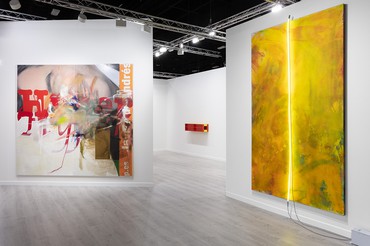
Gagosian is pleased to announce its participation in Art Basel Miami Beach 2021 with a presentation of modern and contemporary works. A selection of these works will also appear on gagosian.com and on Art Basel’s Online Viewing Room.
To receive a pdf with detailed information on the works, please contact the gallery at inquire@gagosian.com. To attend the fair, purchase tickets at artbasel.com.
Gagosian’s booth at Art Basel Miami Beach 2021. Artwork, left to right: © Albert Oehlen; © Judd Foundation/Artists Rights Society (ARS), New York; © Mary Weatherford. Photo: Sebastiano Pellion di Persano
Museum Exhibitions
Closed
The Milton and Sheila Fine Collection
November 18, 2023–March 17, 2024
Carnegie Museum of Art, Pittsburgh
carnegieart.org
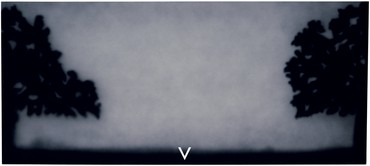
Milton and Sheila Fine have been longtime advocates and supporters of the arts in their philanthropy throughout the Pittsburgh region. Promised to Carnegie Museum of Art in 2015, their collection of contemporary painting, sculpture, photography, and drawing reflects their interest in American and German art from the 1980s to the 2000s. This exhibition, which is presented as a celebration and remembrance of Milton Fine, who passed away in 2019, foregrounds the importance and impact of the gift. Work by Richard Artschwager, Georg Baselitz, Mark Grotjahn, Donald Judd, Brice Marden, David Reed, Ed Ruscha, Richard Serra, Jeff Wall, and Christopher Wool is included.
Ed Ruscha, Victory, 1987, Carnegie Museum of Art, Pittsburgh © Ed Ruscha
Closed
Room by Room
Concepts, Themes, and Artists in the Rachofsky Collection
September 9–November 25, 2023
The Warehouse, Dallas
thewarehousedallas.org
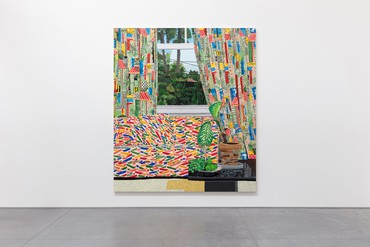
Room by Room builds on the ongoing interest at The Warehouse to reflect on the development of its collection, presenting works for the first time. Spanning a range of mediums, geographies, and eras, each gallery focuses on a single artist or theme, allowing an in-depth look at the artistic movements important to the collection from the outset, together with other avenues of interest that have developed over the years. Work by Richard Artschwager, Carol Bove, Alex Israel, Sterling Ruby, and Jonas Wood is included.
Jonas Wood, Patterned Interior with Mar Vista View, 2020, Rachofsky Collection, installation view, The Warehouse, Dallas © Jonas Wood. Photo: Kevin Todora
Closed
Making Knowing
Craft in Art, 1950–2019
November 22, 2019–February 20, 2022
Whitney Museum of American Art, New York
whitney.org
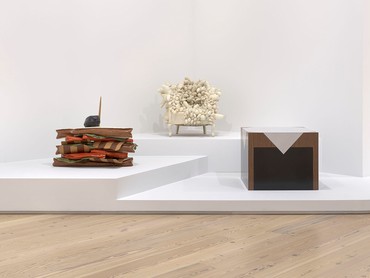
Making Knowing: Craft in Art, 1950–2019 foregrounds how visual artists have explored the materials, methods, and strategies of craft over the past seven decades. Some expand techniques with long histories, such as weaving, sewing, or pottery, while others experiment with clay, beads, and glass, among other mediums. Work by Richard Artschwager and Sterling Ruby is included.
Installation view, Making Knowing: Craft in Art, 1950–2019, Whitney Museum of American Art, New York, November 22, 2019–February 20, 2022. Artwork, left to right: © Claes Oldenburg; © Yayoi Kusama; © 2022 The Estate of Richard Artschwager/Artists Rights Society (ARS), New York. Photo: Ron Amstutz
Closed
Albert Oehlen
“Grandi quadri miei con piccoli quadri di altri”
September 5, 2021–February 20, 2022
Museo d’arte della Svizzera italiana, Lugano, Switzerland
masilugano.ch
In this exhibition, Albert Oehlen: “Big Paintings by Me with Small Paintings by Others”, select works from Oehlen’s personal art collection are on view alongside some of his most significant paintings. In staging this large-scale exhibition, Oehlen aims to make relationships perceptible between his artworks and those by artists whose practices he has long admired. Work by Richard Artschwager, Willem de Kooning, Duane Hanson, Mike Kelley, and Franz West, among others, is included.
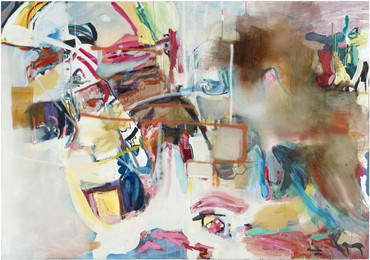
Albert Oehlen, Untitled, 1997/2005 © Albert Oehlen. Photo: Lothar Schnepf
Press
Richard Artschwager’s Late-Career New Mexico Drawings Take Viewers Through the Plains of His Youth by Scott Roben
Art in America
May 27, 2020
Online
PDF
How fashion designers are blurring the lines between runways and art galleries by Alexandra Lange
Washington Post
April 25, 2019
Online
PDF
Richard Artschwager: Primary Sources and Self-Portraits and the American Southwest by Robert C. Morgan
Brooklyn Rail
February 13, 2019
Online
PDF