Now available
Gagosian Quarterly Fall 2019
The Fall 2019 issue of Gagosian Quarterly is now available, featuring a detail from Sinking (2019) by Nathaniel Mary Quinn on its cover.
Summer 2026 Issue
A major exhibition celebrating the work of the British sculptor Henry Moore opened at the Royal Botanic Gardens, Kew, London, in early May, offering visitors a rare opportunity to experience the breadth and evolution of the work of one of the twentieth century’s most influential artists. Organized in collaboration with the Henry Moore Foundation, this career-spanning presentation brings together key works from across six decades of Moore’s life, tracing the development of his sculptural language and the enduring themes that shaped his practice. On view through January 2027 across the grounds of Kew Gardens and the Shirley Sherwood Gallery of Botanical Art, the exhibition situates Moore’s monumental forms within the natural landscape of Kew. In this essay, Laura Bruni, one of the exhibition’s curators, explores some of the ideas, materials, and motivations that defined Moore’s work, highlighting selected works in the exhibition while reflecting on the dialogue between sculpture and nature at the heart of his vision.
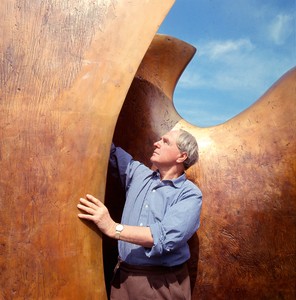
Henry Moore with Knife Edge Two Piece (1962–65). Photo: John Hedgecoe
Henry Moore with Knife Edge Two Piece (1962–65). Photo: John Hedgecoe
Nature is inexhaustible. Not to look at and use nature in one’s own work is unnatural to me. It’s been enough inspiration for two million years—how could it ever be exhausted?
—Henry Moore, in Moore and John Hedgecoe, My Ideas, Inspiration and Life as an Artist, 1986
Few forces have shaped artists’ imaginations as powerfully as nature, and for Henry Moore it was an inexhaustible source of ideas. Best known for his monumental bronzes, Moore emerged as one of the most influential sculptors of the twentieth century. Yet his achievement extended far beyond sculpture alone. With tireless creative energy he moved fluidly between carving in stone and wood, bronze casting, drawing, and printmaking, each medium independent and yet enriching the others.
This summer, Kew Gardens—celebrated for its extraordinary botanical collections and home to over 50,000 living plants within its UNESCO World Heritage landscape—is presenting the largest outdoor exhibition of Moore’s monumental sculptures ever staged. Emphasizing the unprecedented scale of this open-air display, the exhibition marks a significant moment in the public presentation of Moore’s work. Across the gardens at Kew, all of Moore’s central themes are represented: reclining figures, mother and child, internal and external forms, interlocking forms, and the figure in the landscape. The works also showcase a remarkable diversity of surface treatments, ranging from smooth, polished finishes to richly textured surfaces, and spanning materials and patinas from white fiberglass to deep browns, blacks, and vivid green bronzes.
The works shown include such groundbreaking pieces as Three Piece Sculpture: Vertebrae (1968–69; LH 580, cast 0) and Two Piece Reclining Figure: Cut (1979–81; LH 758, cast 0).1 Both works echo the abstract multipart sculptures Moore developed in the 1930s. Although the overall effect is highly abstract, the titles and the easy, organic harmonies among the forms point to their natural origins. The shapes were likely inspired by a bone or piece of flint in Moore’s maquette studio, objects that informed many of his works, including Standing Figure: Knife Edge (1961; LH 482). Like vertebrae, the elements share a common underlying structure while remaining subtly distinct. Their arrangement likewise suggests a spine: Massive forms interlock in a rhythmic horizontal sequence.
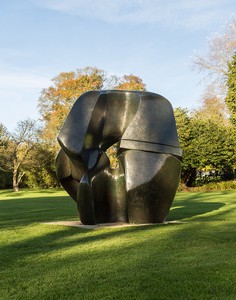
Henry Moore, Locking Piece, 1962–63 (cast 1963), installation view, Henry Moore Studios & Gardens, Perry Green, England. Photo: Sarah Mercer
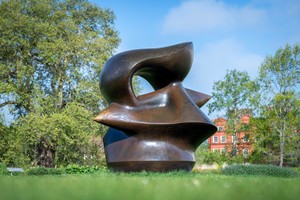
Henry Moore, Large Spindle Piece, 1968, installation view, Henry Moore: Monumental Nature, Kew Gardens, London. Photo: © Ines Stuart Davidson
Moore’s fascination with interlocking forms is explored in several other sculptures in the exhibition, including Locking Piece (1963–64; LH 515). There, the energy concentrates around a central void, while in Three Piece Sculpture: Vertebrae a dynamic force emerges through the lateral interplay of monumental forms. The contrast extends to the surface: Where Locking Piece has a subtly textured finish, Three Piece Sculpture: Vertebrae is smooth and highly polished, a treatment that heightens the tension and clarity of its forms. One of the most striking works in the show—and one of those most beloved by visitors to Moore’s home in Perry Green, Hertfordshire—is Double Oval (1966; LH 560), a work that powerfully evokes the rhythms and structures of the natural world. While not a direct imitation of any single organic form, the sculpture resonates with the logic of balance and internal tension found in nature. As one moves around and through the sculpture, its openings frame constantly changing views of the surrounding landscape, integrating the work with its environment and echoing the way natural forms both shape and are shaped by the spaces around them.
More than ninety works are displayed indoors in the gardens’ Shirley Sherwood Gallery. Together they illuminate Moore’s creative process and sources of inspiration, while tracing his evolving engagement with natural forms throughout his life. Among the highlights are the so-called Transformation Drawings of the 1930s, which demonstrate how he reimagined found natural objects and reveal the wealth of ideas they generated for his later sculptures. In these works, organic abstractions derived from bones and flints intuitively transform into figures and animals. As he explained, “A sculptor is a person obsessed with the form and the shape of things . . . the growth in a flower; the hard, tense strength, although delicate form of a bone; the strong, solid fleshiness of a beech tree trunk.”2
Ideas for Sculpture: Transformation Drawings (1932; HMF 961 verso) is one of Moore’s rare collages, a medium he used only intermittently throughout his career and most likely only between 1928 and 1933. As Andrew Causey has observed, Moore’s collages are unusual in that they consist of rearrangements of his own drawings: Forms are cut out, juxtaposed, and at times partially superimposed upon one another.3 Not only did Moore avoid incorporating materials made by others but, interestingly, he also relied almost exclusively on a single motif in these works: the reclining figure. In Ideas for Sculpture: Transformation Drawings he appears to be rethinking the possibilities of both sculpture and drawing, exploring the distinctions between them while returning persistently to the motif of the reclining figure.
Reclining Figure (1945; LH 255), a sculpture on this theme, is made in terra-cotta, the medium Moore most often used for his preliminary three-dimensional works during the 1930s and early ’40s. His choice of terra-cotta was deliberate rather than incidental: The material carried significant conceptual weight, and its warm hue and fine-grained texture, together with its ability to capture the most subtle surface modeling, made it uniquely responsive. Unlike bronze, terra-cotta preserves the immediacy of touch; unlike stone, it allows for gentle incisions that evoke the suppleness of living flesh. Moore often left finger marks, tool incisions, ridges, and grooves visible, not as imperfections but as vital traces of the contact between artist and material. In this respect his approach parallels that of contemporaries such as Alberto Giacometti, for whom surface irregularity likewise served as a record of sustained physical engagement. The Surrealist affinity for “soft” materials such as clay and plaster also resonates in Moore’s practice, yet he employed these materials within a disciplined formal framework, using them to explore relationships between interior and exterior form on an intimate scale.
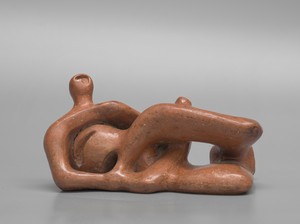
Henry Moore, Reclining Figure, 1945, terra-cotta, 3 ⅜ × 6 ⅛ × 3 inches (8.5 × 15.5 × 7.5 cm). Photo: Nigel Moore
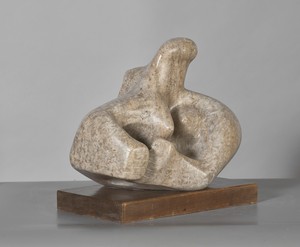
Henry Moore, Composition, 1931, Cumberland alabaster, 14 ¾ × 17 ⅜ × 10 ⅝ inches (37.5 × 44 × 27 cm). Photo: Nigel Moore
Conceptually, Reclining Figure of 1945 occupies a fertile threshold between two of Moore’s most enduring subjects: the reclining figure and the mother and child. In this work he draws the human body into closer alignment with the generative processes of the natural world. The sculpture evokes a moment of becoming—the instant before birth, when form is still emerging, enclosed, and protected. Unlike many of his other reclining figures, this piece contains a layered cavity that strongly suggests an intrauterine space. Such anatomical specificity is rare in Moore’s oeuvre, and it reinforces his long-standing engagement with nature’s cycles of growth and renewal. Formally, the work balances abstraction and representation with remarkable assurance, mirroring nature’s own interplay between irregularity and order. The upper body is composed of smooth ovoid volumes reminiscent of river-worn pebbles or weathered bone, their surfaces suggesting gradual natural formation. In contrast, the underside is articulated through sharper lines. The tension between these two visual languages—soft and angular, eroded and structural—creates a dynamic equilibrium. The figure thus appears both shaped by natural forces and actively containing them, suggesting a profound connection between biology and geology, between the maternal body and the elemental processes of the earth itself.
Another work featured in the exhibition, also titled Reclining Figure and also made in 1945 (LH 247), is one of three terra-cotta maquettes that Moore produced in preparation for a Reclining Figure of 1945–46 (LH 263), his fourth major sculpture carved in elmwood. The immediacy and flexibility of clay allowed him to work with speed and instinct, exploring organic rhythms, the sweep of a limb, and the subtle undulation of bone, and then transforming these impressions into new sculptural forms. Moving fluidly between scales, Moore echoed nature’s own processes of growth, in which forms arise, shift, and evolve in continuous variation. The torso curves in a protective gesture, its upward momentum originating in the feet. The broad, forked motif of the legs transitions into a rounded, near-spherical mass beneath the expansive arch of the breasts. Through a dynamic dialogue of solid and void, of ovoid outlines, nested volumes, and flowing contours, Reclining Figure (LH 247) conveys a sense of warmth and immediacy inseparable from the tactile character of terra-cotta. Here Moore’s enduring themes, the female form and the mother-and-child motif, coalesce in one of his most persistent archetypes, the reclining figure. This timeless configuration would inspire numerous variations throughout his career. Later, in the 1950s and ’60s, Moore executed his maquettes mainly in plaster; the surviving terra-cottas are rare and important, marking a pivotal moment in his development.
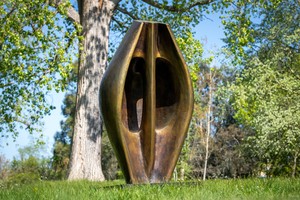
Henry Moore, Large Totem Head, 1968, installation view, Henry Moore: Monumental Nature, Kew Gardens, London. Photo: © Ines Stuart Davidson
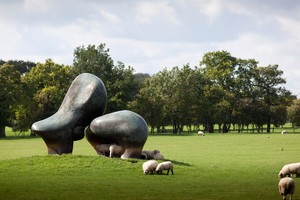
Henry Moore, Sheep Piece, 1971–72, installation view, Henry Moore Studios & Gardens, Perry Green, England. Photo: Jonty Wilde
Through a profound engagement with organic forms, materials, and nature’s most enduring archetypes, Moore created sculptures that still speak to us and reinforce our connection to nature.
From around 1975 onward, Moore immersed himself in the subject of the tree, constantly drawing the trees surrounding him in the gardens of Perry Green, in Hertfordshire, and at Forte dei Marmi, in Italy. He preferred the stark, bare outlines of winter trees, echoes of the human body. To him, the rooted stillness of a tree embodied the stability he sought in sculpture. Fixed firmly in the earth yet reaching outward and upward, trees have a sculptural presence of their own.
As Giovanni Aloi observes in his catalogue essay for the Kew exhibition, “Henry Moore’s Trees and the Groundlessness of Existence,” it is astonishing how much Moore distilled into this sustained series of drawings, works he pursued consistently from the late 1970s until his death in 1986. As Aloi explains, the tree “is a subject that across time has become a staple throughout the history of art. Trees have been backdrops to human vicissitudes, emblems of place, carriers of spiritual and pagan allegories.”4 In Moore’s late drawings, including six published in 1979 as the portfolio Trees, the tree takes a central role. As Aloi goes on,
This mostly overlooked series and its related portfolio belong to the final chapter of the artist’s long career, emerging in the winter of 1977–78 when Moore was approaching eighty. By this time he was an internationally celebrated sculptor, his name synonymous with monumental reclining figures and public commissions in bronze and stone populating many cities around the globe. Yet in the quiet grounds of his home at Perry Green, a tranquil hamlet in Hertfordshire, only a few miles northeast of London, he turned to an altogether different subject and scale. Most of its inspiration came from the Dane Tree House orchard, its old apple trees stripped bare by the cold season.5
Trees VII (1975; HMF 75(35)) focuses on the intricate, almost sculptural quality of exposed tree roots. The roots twist and knot into one another, forming a dense web of lines that seems both grounded and animated. The gnarled roots give the composition a sense of tension and compression: Rather than seeming stable and anchored, they feel restless—coiling, gripping, and interlocking like muscular forms beneath the surface of the earth. Moore’s emphasis on contour and shadow heightens their physicality, transforming natural growth into something almost anatomical. The roots resemble sinews or veins, evoking the hidden systems that sustain life.
Conversely, Tree and Sky (1981; HMF 81(402)) presents a stark and imposing vision of a tree stripped of foliage. The barren branches reach upward, etched sharply against the open sky. The composition is daunting in its simplicity, with dark, angular limbs set against a lighter, often empty background. The branches are strikingly sculptural, their contorted forms recalling wrought iron and twisted metal. At the same time, the skeletal quality of the tree lends the image a subtle quality of the memento mori: The limbs resemble bones or outstretched arms. This skeletal association contributes to the work’s unsettling, almost austere mood. The absence of leaves strips the tree to its essential structure, revealing the architecture of growth.

Henry Moore, Old Hedgerow, Gnarled Trunks, 1978, charcoal and watercolor wash on blotting paper, 11 ⅛ × 8 ¾ inches (28.3 × 22.2 cm). Photo: Nigel Moore
This radical reduction to line and structure invites comparison with Japanese art, particularly the economy of means found in ukiyo-e prints and ink painting.6 The sinuous yet controlled articulation of the branches recalls the linear mastery of Japanese artists such as Utagawa Hiroshige and Katsushika Hokusai, whose depictions of trees often emphasize expressive movement and shape over volumetric modeling; in their prints and drawings, trees are reduced to calligraphic sweeps, each branch defined by a decisive unbroken line. The empty sky in Tree and Sky resonates strongly with the Japanese aesthetic principle of ma, the charged, meaningful interval of emptiness that allows forms to breathe. Moore’s open background is not merely blank space; like the unprinted paper in a woodblock print, it activates the silhouetted form, intensifying its presence. Moore owned several books on Japanese prints, drawings, and sculpture, and while there is no explicit documentation confirming direct inspiration, the visual affinities are compelling: the disciplined line, the prominence of negative space, and the elevation of the tree as an expressive, almost anthropomorphic form.
Branches against the Sky (1982; HMF 82(78)) continues the exploration of arboreal form seen in Tree and Sky but shifts the emphasis toward pattern and spatial interplay. Here, the branches spread outward in a network of intersecting lines, creating a weblike canopy that fragments the sky into irregular shapes. Instead of focusing on the vertical authority of a single trunk, the composition disperses energy across the surface. The sky peeks through gaps in the branches, turning negative space into an active compositional element. The contrast between the dark tracery of the limbs and the lighter sky produces a rhythmic visual movement across the page. Once again there is a sculptural quality, but here it is more linear and calligraphic. The branches become drawn gestures, marks in space that hover between representation and abstraction. While still austere, the mood is slightly less foreboding than in Tree and Sky. The emphasis on intricate pattern softens the severity, letting the viewer experience the branches as both natural phenomenon and formal design.
Old Hedgerow, Gnarled Trunks (1978; HMF 78(2)) draws the viewer into the tangled, muscular gnarling of exposed tree roots. The image presents the tree not as an emblem of nature’s serenity but as a forceful, almost anatomical presence, its sinews thrusting outward, its surfaces marked by strain, growth, and strength. As Aloi observes, “Rather than a curiosity or an unusual mediatic diversion for an artist known to handle heavy materials, Trees reads as a distilled statement of Moore’s lifelong engagement with organic form: the blueprint lying within all his monumental sculptures, rooted in the same fascination with the interplay between structure, growth and the enduring influence of nature upon his creativity.”7

Henry Moore, Large Two Forms, 1966–69, installation view, Henry Moore: Monumental Nature, Kew Gardens, London. Photo: © Ines Stuart Davidson
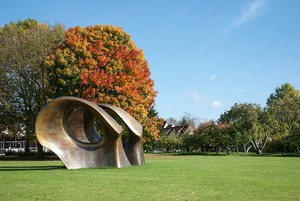
Henry Moore, Double Oval, 1966, installation view, Henry Moore Studios & Gardens, Perry Green, England. Photo: Sarah Mercer
Tucked away in the final gallery is an unassuming work that could easily be overlooked. It is a carved root from Moore’s “library of forms,” now housed in the Bourne Maquette Studio at Perry Green.8 Moore was an ardent collector of nature’s debris, the pebbles, shells, bones, and roots that he drew in his Transformation Drawings. Over time, his studio became a remarkable archive of organic discoveries, a private treasury of the shapes underpinning his most monumental works. Most of these objects remained untouched, displayed on shelves and valued in their own right. This root carving is a rare exception: Rather than preserving the fragment exactly as he found it, Moore approached it as he would one of his sculptures, paring back the outer layer of the upper section, refining its bowllike body, and carefully shaping the lower form into a solid cylindrical neck.9
Through a profound engagement with organic forms, materials, and nature’s most enduring archetypes, Moore created sculptures that still speak to us and reinforce our connection to nature. The Kew exhibition offers a rare and powerful opportunity to experience his vision at its fullest scale and intensity. Set within that extraordinary landscape, this landmark show takes on heightened significance. With their preservation and understanding of the natural world, the Royal Botanic Gardens provide more than a backdrop; they offer a living context that amplifies Moore’s artistic philosophy, compellingly revealing the vitality and relevance of his work.
Moore himself articulated the depth of this connection to nature: “The whole of nature—bones, pebbles, shells, clouds, tree trunks, flowers—all is grist to the mill of a sculptor. It all needs to be brought in at one time. People have thought . . . that the human figure was the only subject, that it ended there; a question of copying. But I believe it’s a question of metamorphosis. We must relate the human figure to animals, to clouds, to the landscape—by bringing them all together. There’s no difference between them all. By using them like metaphors in poetry, you give new meanings to things.”10
1 To help readers identify works of art, this essay uses the Henry Moore Foundation’s catalogue raisonné numbers throughout. LH refers to Henry Moore: Complete Sculpture (London: Lund Humphries, six volumes, 1944–2003), HMF to Henry Moore: Complete Drawings (Much Hadham: Henry Moore Foundation, in association with Lund Humphries, six vols., 1994–2003).
2 Henry Moore, quoted in Warren Forma, Five British Sculptors: Work and Talk (New York: Grossman, 1964), p. 59, p. 63. Repr. in Alan Wilkinson, ed., Henry Moore: Writings and Conversations (Aldershot: Lund Humphries, 2002), p. 198.
3 Surprisingly little research has been done on this aspect of Moore’s work, with the exception of Andrew Causey, The Drawings of Henry Moore (London: Lund Humphries, 2010), pp. 68–69. Causey also lists HMF 929; see also HMF 930.
4 Giovanni Aloi, “Henry Moore’s Trees and the Groundlessness of Existence,” in Laura Bruni, Henry Moore: Monumental Nature, exh. cat. (London: Kew Publishing, 2026), p. 104.
5 Ibid.
6 The author wishes to express her deepest gratitude to Suzanne Wilkes, archive collections coordinator at the Henry Moore Foundation, for proposing this connection in discussions of the present work on February 20, 2026, during preparations for the Kew exhibition catalogue.
7 Aloi, “Henry Moore’s Trees,” p. 108.
8 Moore is often quoted referring to his collection of found objects as a “library of natural forms.” See, e.g., Roger Berthoud, The Life of Henry Moore, 1987 (rev. ed. London: Giles de la Mare, 2003), p. 409.
9 The author gratefully acknowledges Samet Mor, postdoctoral researcher at the Henry Moore Foundation, for this insightful observation.
10 Moore, quoted in Carlton Lake, “Henry Moore’s World,” Atlantic Monthly, January 1962, p. 42. Quoted here from Wilkinson, Writings and Conversations, p. 222.
All images reproduced by permission of the Henry Moore Foundation; artwork © The Henry Moore Foundation
Henry Moore: Monumental Nature, Royal Botanic Gardens, Kew, London, May 9, 2026–January 31, 2027
The art historian and curator Laura Bruni currently serves as curator of exhibitions at the Henry Moore Foundation, where she also served as acting senior curator of collections and research between September 2023 and May 2024.
The Fall 2019 issue of Gagosian Quarterly is now available, featuring a detail from Sinking (2019) by Nathaniel Mary Quinn on its cover.
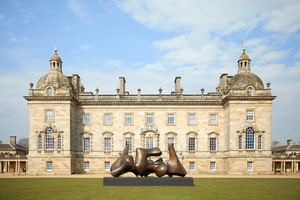
Sebastiano Barassi reflects on the centrality of nature in the work of Henry Moore—as form, material, inspiration, and site.
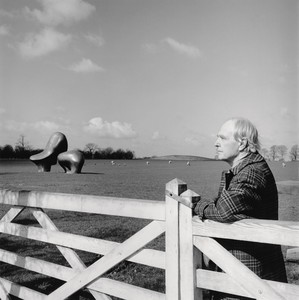
A look inside the Henry Moore Foundation, their new initiatives, and what’s next.

Francis Bacon lived and worked in Paris for a decade starting in the mid-1970s. The city and the art he encountered there provided a profound backdrop for his austere late style, which often brings together smooth, colorful backgrounds, spare architectural signifiers, and sculptural human forms. Here, three striking paintings from that period are considered by Sebastian Smee.

Janne Sirén considers Anselm Kiefer’s new paintings, the subject of an exhibition at Gagosian, New York, entitled Seal My Ears Shut and I Shall Hear You Still.

Adam D. Weinberg has been working with Giuseppe Penone on an exhibition of the artist’s new sculptures, The Reflection of Bronze, that opens at Gagosian, New York, on April 22. The works explore the character and possibilities of bronze. Here, Weinberg considers Penone’s enduring engagement with the alloy and addresses the conceptual underpinnings of the exhibition’s three-room structure.
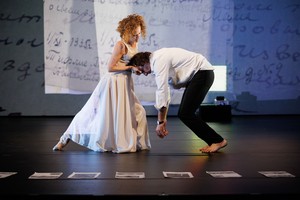
Mark Franko considers how Emily Coates resurrects the spirit of George Balanchine’s American beginnings through archival research, spoken dialogue, and movement in her performance Tell Me Where It Comes From.
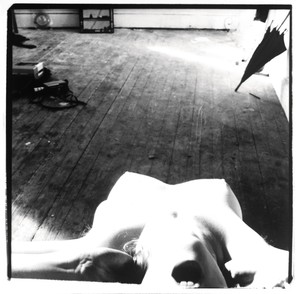
On the occasion of the exhibition Francesca Woodman: Lately I Find a Sliver of Mirror Is Simply to Slice an Eyelid at Gagosian, Rome, Alyce Mahon explores the artist’s engagements and affinities with Surrealism, from the writings of André Breton to the photographs of Hans Bellmer. Mahon focuses on the time Woodman spent in Rome while she was a student at the Rhode Island School of Design.
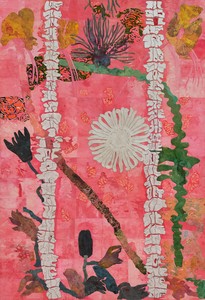
Sharad Chari reflects on a recent visit to Ellen Gallagher’s studio in Rotterdam, Netherlands, thinking through the artist’s intertextual interrogation of the oceanic and the ways in which her practice is informed by a wider Black intellectual and artistic world, an abiding interest in Herman Melville’s Moby-Dick, and the imperatives that surround this studio by the Port of Rotterdam.
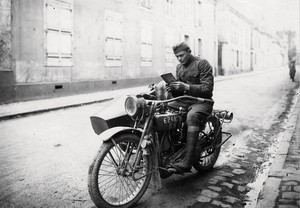
Christian House reports on Paris’s American Library, a storied collection of English-language books in the French capital, tracking its evolution and enduring role in a cosmopolitan literary milieu from World War I to the present day.

Salomé Gómez-Upegui honors Beatrice Wood, the “Mama of Dada,” an underappreciated trailblazer within the movement who went on to become a brilliant ceramist.
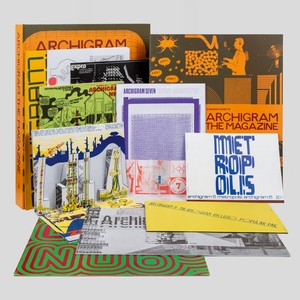
D.A.P. and Designers & Books have published the first authorized facsimile of the highly influential and heterodox magazine Archigram, produced by the architectural collective of the same name between 1961 and 1974. This new edition faithfully duplicates the original nine and a half issues, complete with pop-ups, electric resistors, gatefolds, and all, and accompanies them with a collection of essays by key figures from the world of architecture. Here, Dan Fox considers the legacy of this innovative, irreverent, and prophetic magazine.