

About
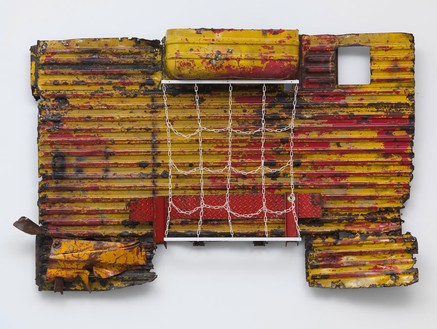
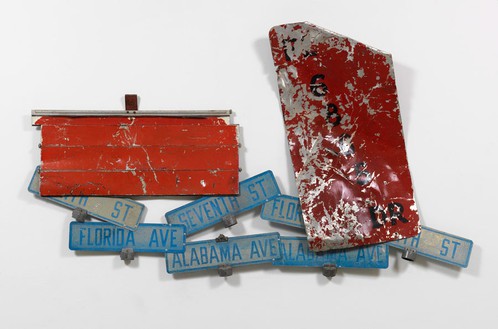
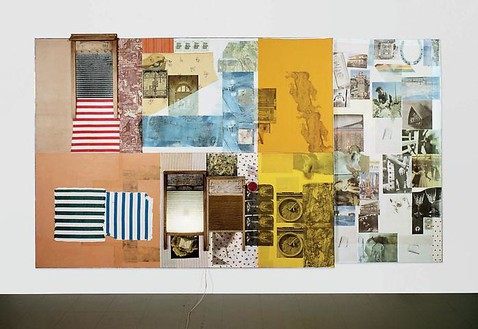
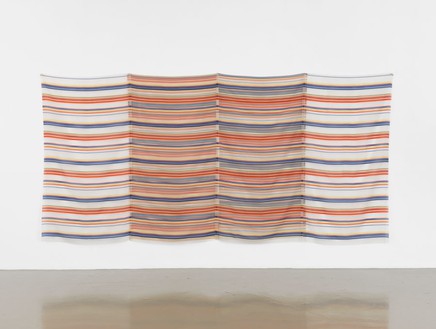
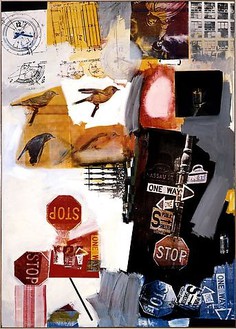
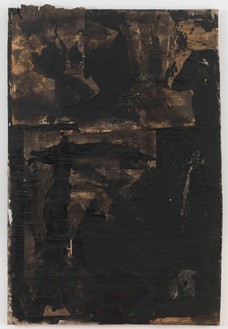
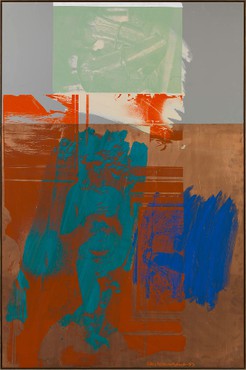
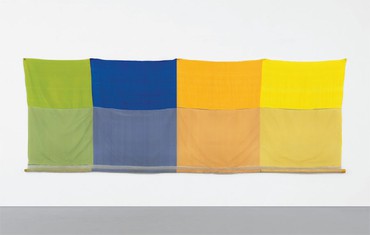
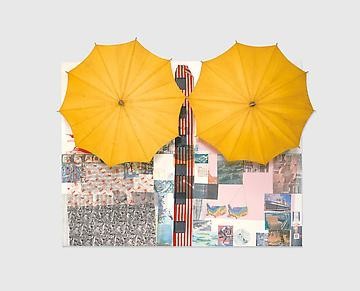
Robert Rauschenberg ushered in a new era of postwar American art in the wake of Abstract Expressionism. His approach, along with that of his contemporary Jasper Johns, was sometimes termed “Neo-Dada,” due to its relation to both European forebears and the physical gestures of American Abstract Expressionists. His Combine works (1954 to early 1960s) blurred the distinctions between painting and sculpture, as their flat surfaces were augmented with discarded materials and appropriated images. Rauschenberg also worked with photography, printmaking, papermaking, and performance, the last of which resulted in a number of collaborations with choreographers, including Merce Cunningham, Paul Taylor, and Trisha Brown. Rauschenberg was among the founding members of the innovative group Experiments in Art and Technology (E.A.T.) in 1966, and in 1984 he established the Rauschenberg Overseas Culture Interchange (ROCI) to bring art to communities around the world, saying, “I feel strong in my beliefs, based on my varied and widely traveled collaborations, that a one-to-one contact through art contains potent peaceful powers, and is the most non-elitist way to share exotic and common information, seducing us into creative mutual understandings for the benefit of all.” Rauschenberg’s nontraditional art practice and creative energy generated an enduring influence that impacted generations of artists, as noted by art historian Branden W. Joseph: “Rauschenberg’s was a position with which artists across the board were confronted and to which they almost necessarily had to respond. … Rauschenberg’s work served as a stimulus, an impetus and a challenge.”
Robert Rauschenberg was born in 1925, in Port Arthur, Texas and died on Captiva Island, Florida in 2008. He has had numerous exhibitions worldwide, including “Robert Rauschenberg: A Retrospective,” Solomon R. Guggenheim Museum, New York (1997, traveled to Menil Collection, Contemporary Arts Museum, and Museum of Fine Arts, Houston, Museum Ludwig, Cologne and Guggenheim Museum, Bilbao, through 1999); “Combines,” Metropolitan Museum of Art, New York (2005, traveled to Museum of Contemporary Art, Los Angeles, Centre Pompidou, Paris, and Moderna Museet, Stockholm in 2007); “Cardboards and Related Pieces,” Menil Collection, Houston (2007); “Traveling ‘70–‘76,” Museu de Arte Contemporânea de Serralves, Porto (2008, traveled to Haus der Kunst, Munich, and Madre, Naples in 2009); “Gluts,” The Peggy Guggenheim Collection, Venice (2009, traveled to The Tinguely Museum, Basel, Guggenheim Museum Bilbao, and Villa e Collezione Panza, Varese in 2010); and “Botanical Vaudeville,” Inverleith House, Royal Botanic Garden, Edinburgh (2011). Gagosian Gallery first exhibited Robert Rauschenberg’s work in 1986.
#RobertRauschenberg
Website
Exhibitions
Fairs, Events & Announcements
New Release
Gagosian App for iPad
Issue 4
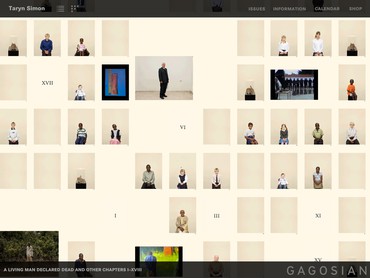
Gagosian announces the release of issue 4 of the Gagosian App for iPad on July 13, 2013. Artists featured in this issue include Georg Baselitz, Piero Manzoni, Robert Rauschenberg, Nancy Rubins, Thomas Ruff, Taryn Simon, and Cy Twombly.
In issue 4 we feature an illustrated “pop-up” biography of Georg Baselitz, show Piero Manzoni’s Azimuth magazines digitized with full English translations for the first time, offer an endless “art board” of works from the exhibition The Private Collection of Robert Rauschenberg, including historical and biographical information on more than seventy-six artists. We also show a comprehensive overview of Nancy Rubins’s monumental public sculptures made from industrial objects, and give you a look at Thomas Ruff’s stereoscopic ma.r.s. photographs in 3-D. We invite you to interact with multimedia highlights from Taryn Simon’s four major bodies of work, curated by the artist, and explore Cy Twombly’s final paintings with a photographic and audio tribute to the artist by Sally Mann.
New Release
Gagosian App for iPad
Issue 1
Gagosian announces the launch of a free iPad app, designed by award-winning firm RadicalMedia, which offers unprecedented access and takes users on an in-depth journey with Gagosian’s artists and exhibitions, presented through visually stunning, richly informative and innovative features on June 12, 2011.
Artists featured in this issue include Richard Avedon, Cecily Brown, John Chamberlain, John Currin, Vera Lutter, Kazimir Malevich, Elizabeth Peyton, Pablo Picasso, Richard Prince, Robert Rauschenberg, and Rudolf Stingel.
Museum Exhibitions
Closed
Cy Twombly
Morocco, 1952/1953
March 4–July 2, 2023
Musée Yves Saint Laurent Marrakech, Morocco
www.museeyslmarrakech.com
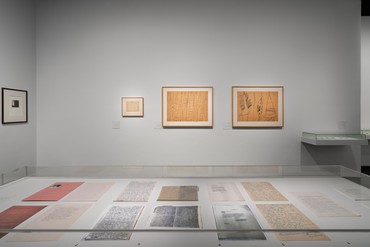
In the fall of 1952, Cy Twombly met up with his friend Robert Rauschenberg in Casablanca and the two of them traveled to Marrakech, the Atlas Mountains, and then on to Tangier. Much of the surviving work from this trip consists of photographs taken with a Rolleiflex camera shared by the artists, and sketches preserved by their respective foundations. This exhibition, curated by Nicola Del Roscio, explores Twombly’s affinity for Morocco through his paintings, photographs, and sketches. Cy Twombly, Morocco, 1952/1953 is presented by the Fondation Jardin Majorelle, in partnership with the Cy Twombly Foundation and the Fondazione Nicola Del Roscio.
Installation view, Cy Twombly: Morocco, 1952/1953, Musée Yves Saint Laurent Marrakech, Morocco, March 4–July 2, 2023. Artwork © Cy Twombly Foundation. Photo: Marco Cappelletti, courtesy Fondation Jardin Majorelle